U.S. flag

An official website of the United States government

Here’s how you know

Dot gov

Official websites use .gov
A .gov website belongs to an official government organization in the United States.

Https

Secure .gov websites use HTTPS
A lock ( Lock A locked padlock ) or https:// means you’ve safely connected to the .gov website. Share sensitive information only on official, secure websites.

  • Visit
    • Events and Programs
    • Schedule a Tour
    • Frequently Asked Questions
  • The Collection
    • Collection Spotlight
    • Video Archive
    • Donate to the Collection
  • Exhibits
    • On-Site Exhibits
    • Online Exhibits
      • History of the Drug Enforcement Administration’s Foreign-deployed Assistance and Support Team
      • The History of Drug Use in America
      • DEA: Air, Land, and Sea
      • Cannabis, Coca, and Poppy: Nature’s Addictive Plants
      • Red Ribbon Week
    • Traveling Exhibit
    • Wall of Honor
  • Education
    • Lesson Plans
    • Junior Special Agent Program
    • Online Resources: Drug Use and Misuse
    • Online Resources: Drug Law Enforcement
    • Other Museums and Tours
    • Scouting and Youth Programs
  • Oral Histories
  • Search
  • Menu
Home
Facebook Logo
  • About
  • Contact
  • Get Updates
  • Menu

Main Menu

  • Visit
  • The Collection
  • Exhibits
  • Education
  • Oral Histories
  • Search
  • Menu

Breadcrumb

  1. Home
  2. Exhibits
  3. Online Exhibits
  4. Never Forget: 25 Years after 9/11
  5. Responses
Museum Hours

Open Tuesday - Saturday, 10 a.m. to 4 p.m. 


Responses

DEA's Initial Responses

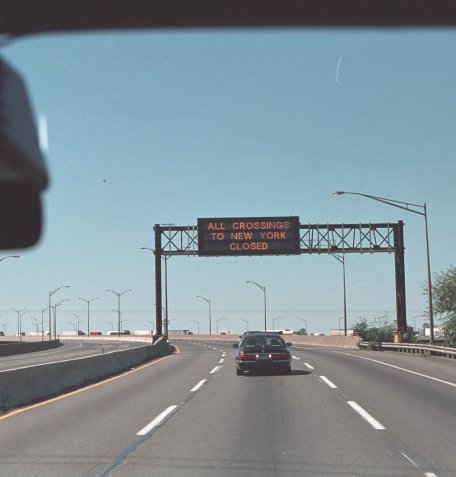
Roads and airspace in and around New York City, and Washington, DC, were closed following the attacks. George W. Bush Presidential Library.

DEA personnel sprang into action and were integral parts of the country’s response in the weeks and months following. In Arlington, special agents in plainclothes were quickly on the scene, evacuating DEA staff, directing traffic and crowds, and securing the perimeter of the Pentagon.

DEA special agents in New York were told not to go to Ground Zero, lacking the proper equipment, training, and safety gear. But duty called some to join other first responders, including colleagues in the New York City Police Department Task Force. They went to Ground Zero to assist with rescue and digging.

Special agent pilots from the Aviation Division delivered critical blood supplies and flew daily camera missions over Ground Zero.

Witnesses later remarked on the “deafening” silences from the lack of commercial air and vehicular traffic as highways and airports around Washington, D.C., and New York remained closed to civilians after the attacks.
United We Stand

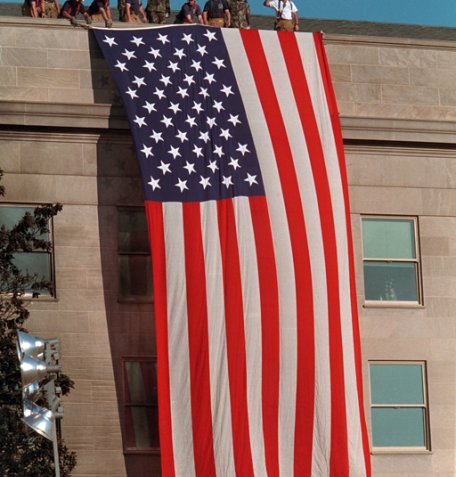
A large American flag hangs from the Pentagon. Flags and flag imagery were everywhere as the nation tried to move forward following the attacks.  George W. Bush Presidential Library.
A large American flag hangs from the Pentagon. Flags and flag imagery were everywhere as the nation tried to move forward following the attacks.  George W. Bush Presidential Library.

Many people felt called to serve their communities in recovery efforts, or to join the U.S. military to serve in Afghanistan. DEA shifted its resources to help with intelligence gathering, data and phone analysis, and searches to investigate the attacks.

The U.S. needed more air marshals to keep the skies safe. Over 1,000 DEA special agents responded to DEA Administrator Asa Hutchinson’s call for volunteers. They used their law enforcement skills to serve as temporary air marshals on flights as new air marshals were recruited and trained. A DEA special agent during 9/11, later remembered:

“I still wanted to serve and I wanted to contribute, and I felt like the air marshal opportunity was probably the fastest way…I certainly wasn't going to sit in San Francisco and work drug cases while the nation was at war.

The country had really come together as one. There was this unified sense of purpose. And I think all of the agents that were serving as temporary air marshals, they all felt strongly that this was not going to happen again on their watch.”
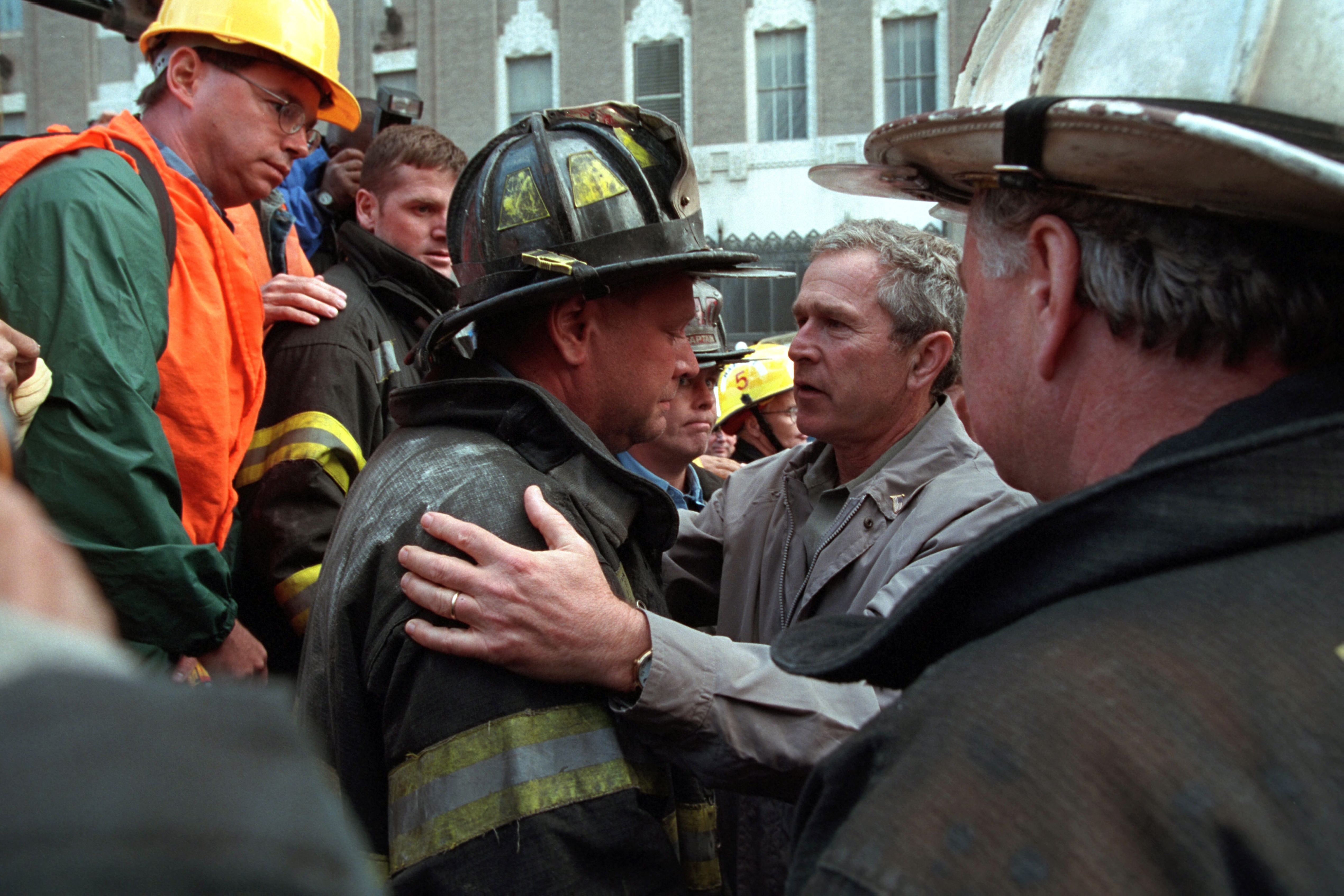
President Bush consoles firefighters and first responders at Ground Zero. George W. Bush Presidential Library.


Heroes Run Towards Danger

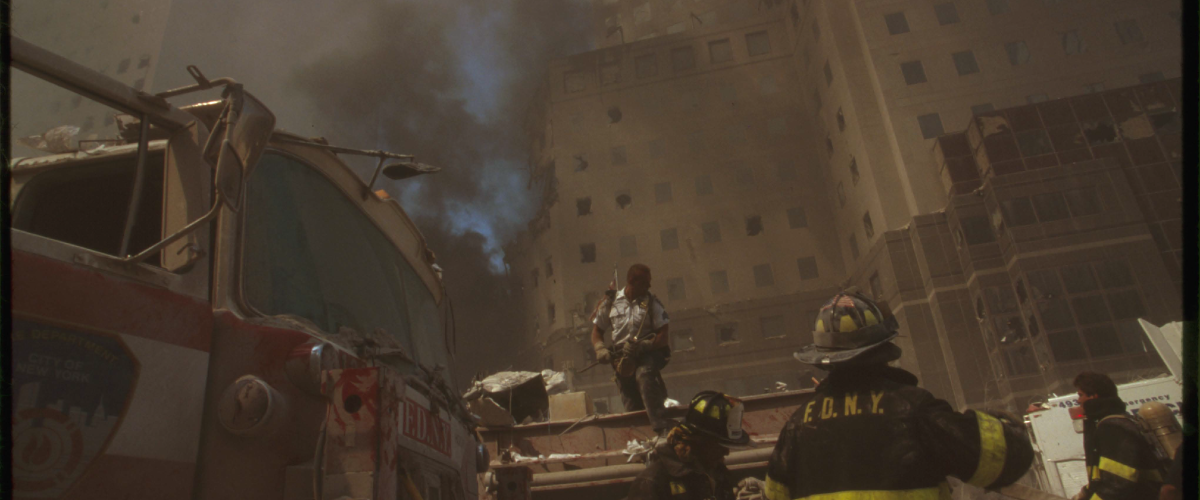
First responders and law enforcement confront danger to keep others safe. Many died in the line of duty that day. Other brave firefighters, police, EMTs, clean-up workers, and survivors of the 9/11 attacks face serious health consequences. They inhaled highly toxic dust particles of concrete, glass, silica, asbestos, smoke, jet fuel, and more. Survivors are at higher risk of developing cancers, sarcoidosis, respiratory conditions, and mental health issues like PTSD.

The CDC’s World Trade Center Health Program provides medical monitoring and treatment to responders and survivors. In 2026, Congress approved bipartisan legislation to ensure long-term funding and stability for the program. Another federal fund, the 9/11 Victim Compensation Fund, also supports survivors.

New York Fire Dept. heroes work amidst dangerous dust and smoke at Ground Zero. Library of Congress.
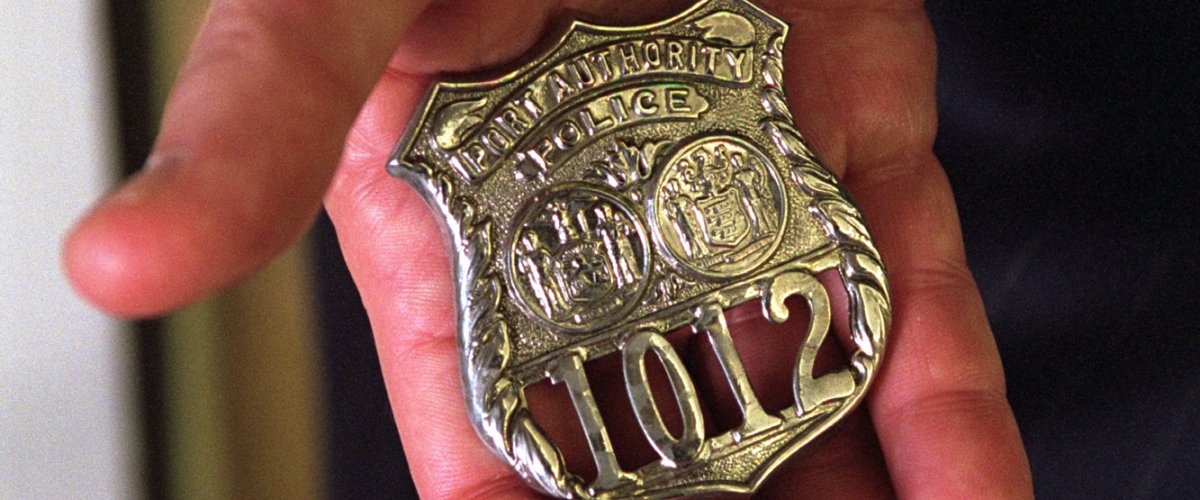
President George W. Bush holds the badge of an NYPD hero who gave his life trying to save others on 9/11. George W. Bush Presidential Library.
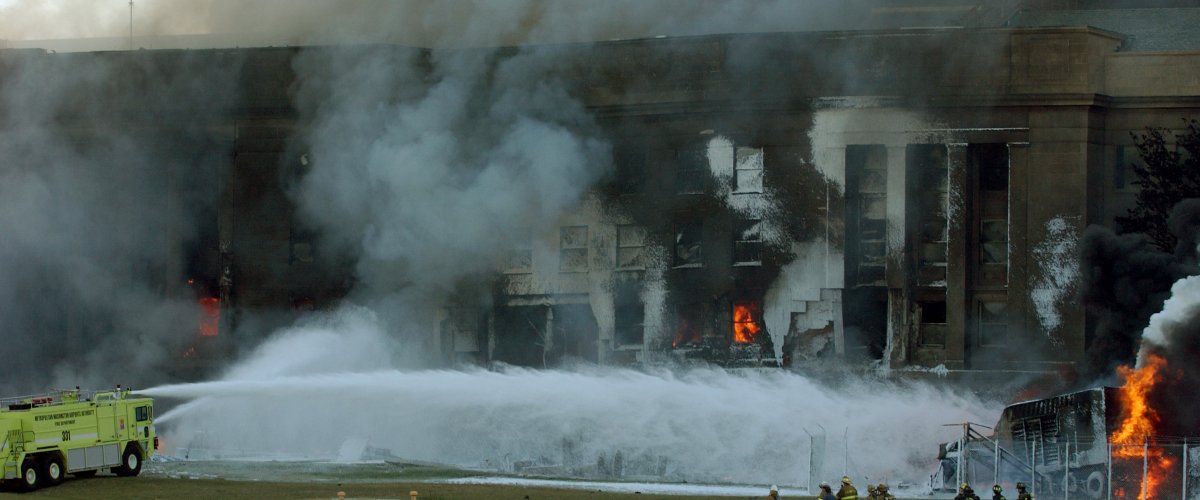
Firefighters battle flames at the Pentagon site. National Archives.
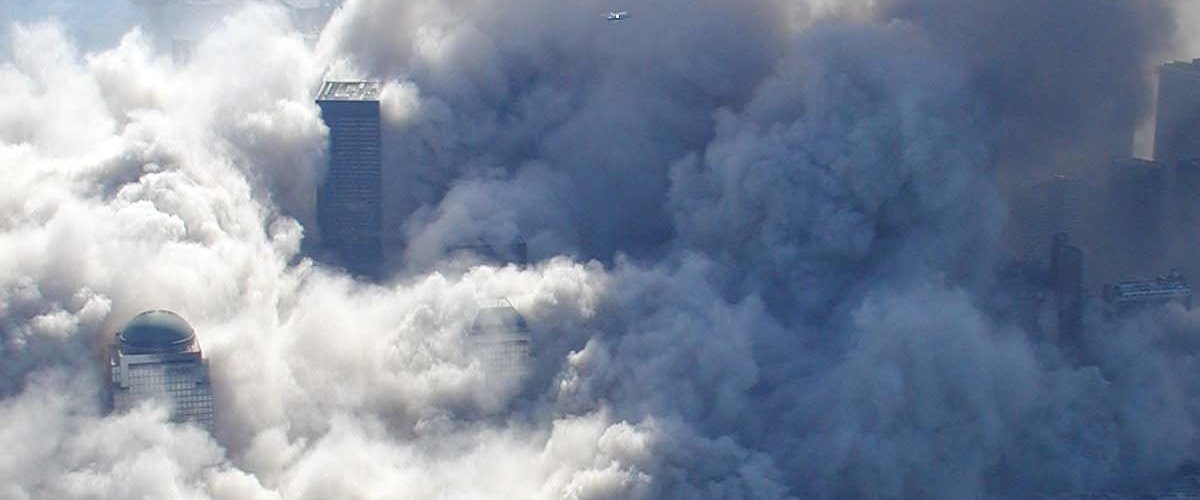
The toxic dust cloud enveloped lower Manhattan as the World Trade Center towers collapsed. National Archives.

Members of the DEA New York City Police Department Task Force, a coalition of state and local law enforcement who worked with DEA federal agents in New York City, are among those who have lost their lives since responding to Ground Zero on 9/11.

Paul R. Stuewer, Investigator, NY State Police (October 5, 2021)
Traci L. Tack-Czajkowski, Detective, NYPD (January 15, 2013)
Thomas G. Moran, Jr., Senior Investigator, NY State Police (July 22, 2012)
Terence P. Mulvey, Detective, NYPD (January 1, 2021)
Thomas J. Barnitt, Detective, NYPD (June 11, 2018)
Robert P. Masci, Sergeant, NYPD (June 9, 2018)
Mark Mkwanazi, Detective, NYPD (February 16, 2017)
DEA Museum Logo
Visiting Address

700 Army Navy Dr
Arlington, VA 22202

Phone Number

(202) 307-3463

Mailing Address

8701 Morrissette Dr
Springfield, VA 22152

Museum Hours

Open Tuesday - Saturday
10 a.m. to 4 p.m.

  • About
  • Contact
  • Visit
  • The Collection
  • Education
  • Accessibility, Plug-ins, & Policy
  • Legal Policies & Disclaimers
  • No FEAR Act
  • Privacy Policy
  • U.S. Department of Justice EEO Policy
  • USA.gov
  • Whistleblower Protection

© Copyright 2021. Admission to the DEA Museum is FREE.

  • Email
  • Facebook