


Hero
Museum Hours
Open Tuesday - Saturday, 10 a.m. to 4 p.m.
Forensic Science Activities
Content
Forensics Activities for Kids
Disclaimer: These activities are meant to be used by teachers, parents, and caregivers. Do not perform activities unsupervised.
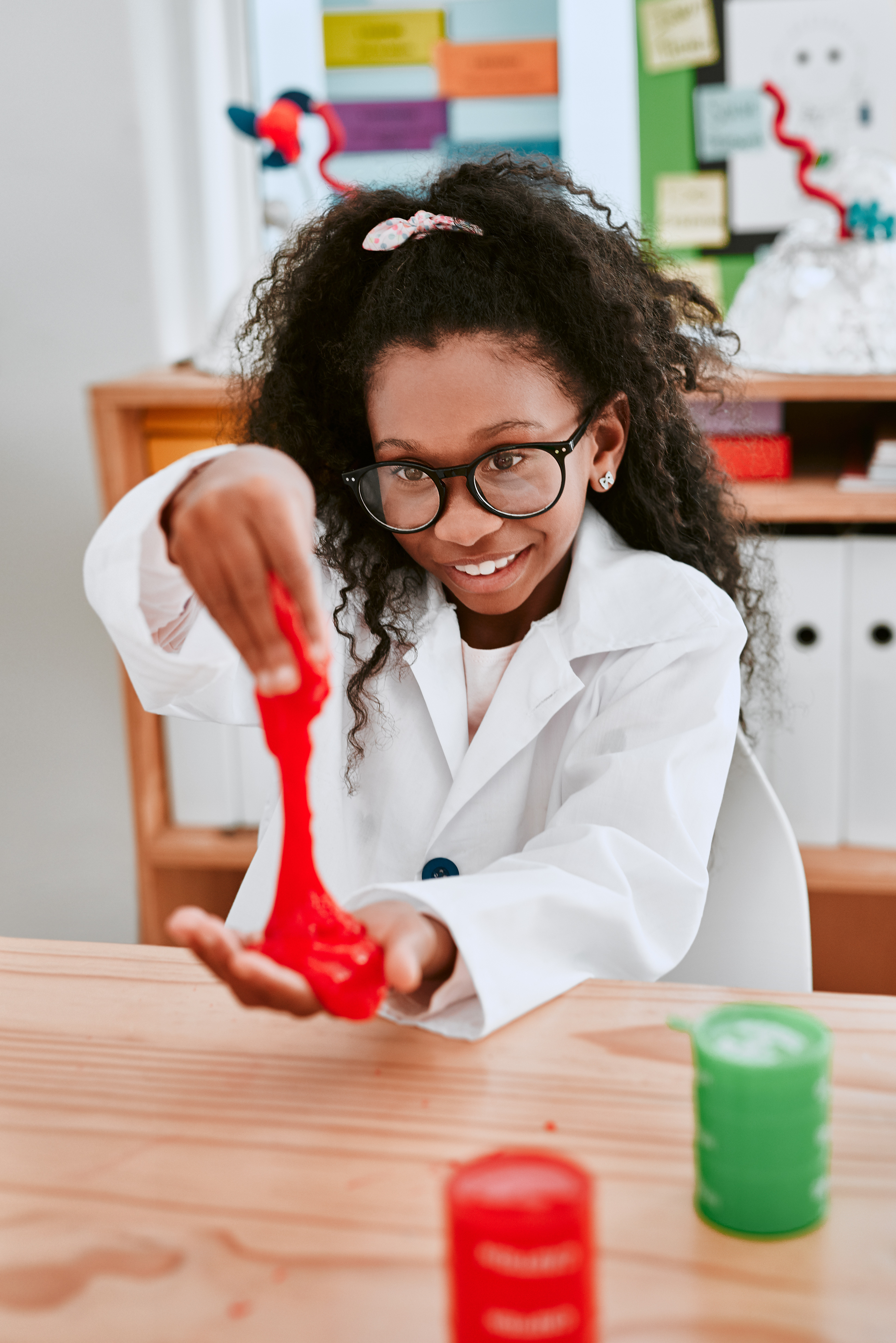 Slime
Ingredients:
- 1 tsp borax powder
- 1 ½ cup water (divided)
- ½ cup Elmer’s glue
- Food coloring
Directions:
- Add borax powder to 1 cup water and stir to dissolve. Set aside.
- Pour glue into a medium mixing bowl and add ½ cup water. Add a few drops of food coloring until desired color is reached. Stir until smooth.
- Pour the borax mixture into the glue mixture and watch the solids begin to form. Stir briefly then use your hands to gather the mass. The mixture will be very soft and wet. Keep kneading until it firms up and feels dry.
- Discard excess liquid in bowl. The more you knead and play with the slime the firmer it will become. Store in Ziplock bag or airtight container.
- The slime is stretchy because glue is made up of long molecules called polymers. When borax solution is added to the glue, it makes ionic bonds with the polymers, which changes the runny and liquid glue into a rubbery substance.
- Safety tip: Do not mix your slime or excess borax with chlorine bleach.
Slime can be made 1-2 days in advance, if desired.
Oobleck
Oobleck is a fun sensory activity that will keep children entertained due to it being neither solid nor liquid (non-Newtonian is the scientific term).
You can even have kids stand on it!
Ingredients:
- Corn Starch
- Water
Directions:
- Mix 2 cups of cornstarch with 1 cup of water in a large mixing bowl. Mix until achieving a thick, gooey consistency. If it is too dry, add water, if too runny, add cornstarch.
- Once you have achieved the desired consistency, let children play with the Oobleck using their hands, spoons, or other utensils.
- Experiment with different methods of stirring or manipulation of the Oobleck. What happens if you try to move it around quickly? Is it easier or more difficult to stir slowly? The physical property you are observing is called viscosity, or resistance to flow. Another example of differences in viscosity is seen when you pour honey versus pouring water.
Scale up or down as needed
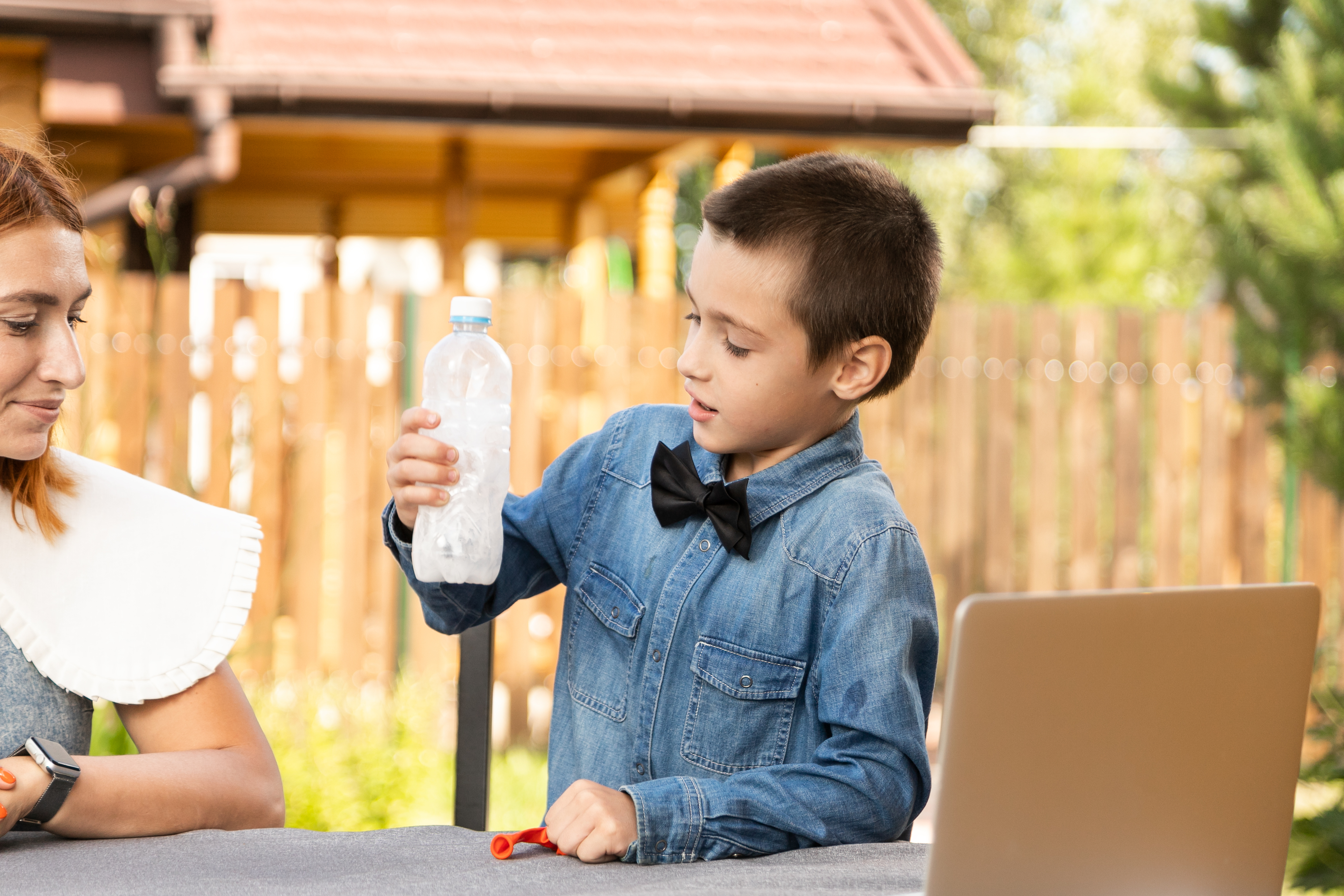 Bottle Rockets
Ingredients:
- Film Cannisters or other small containers with a snap-close lid. Do not use screw-cap containers.
- Water
- Alka-Seltzer tablets (cold and flu works just as well as tummy ache variety)
Directions:
- Add about 10ml water and ¼ Alka-Seltzer tablet to a film cannister.
- Close quickly with lid and place lid-down on flat surface.
- Film cannister will shoot off after a few minutes like a rocket!
Notes:
- Be sure to use safety goggles and keep a safe distance away from the bottle rocket once it is placed on the flat surface.
- Be sure the film cannister doesn’t have a small hole in the bottom or it will not shoot off.
- The tablets release carbon dioxide gas, which creates pressure inside of the container. What would happen if you used more Alka-Seltzer tablets? The temperature of a chemical reaction will determine whether that reaction happens fast or slow. What would happen if you used warm or cold water for your rocket?
Chromatography
Ingredients:
- Washable markers (must be branded as washable)
- Coffee filters
- Cups
- Water
Directions:
- Draw a circle in the middle of a coffee filter. Allow to dry.
- Fold the coffee filter into fourths or even eighths and place in water.
- Watch as capillary action moves the marker chemicals through the filter.
- As the marker circle moves across the filter, does the line change width or separate into multiple bands? The dyes and inks inside of markers are often made from a mixture of pigments and other substances. Because these substances have different chemical properties, they move through the paper at different rates. This is the underlying principle of chromatography.
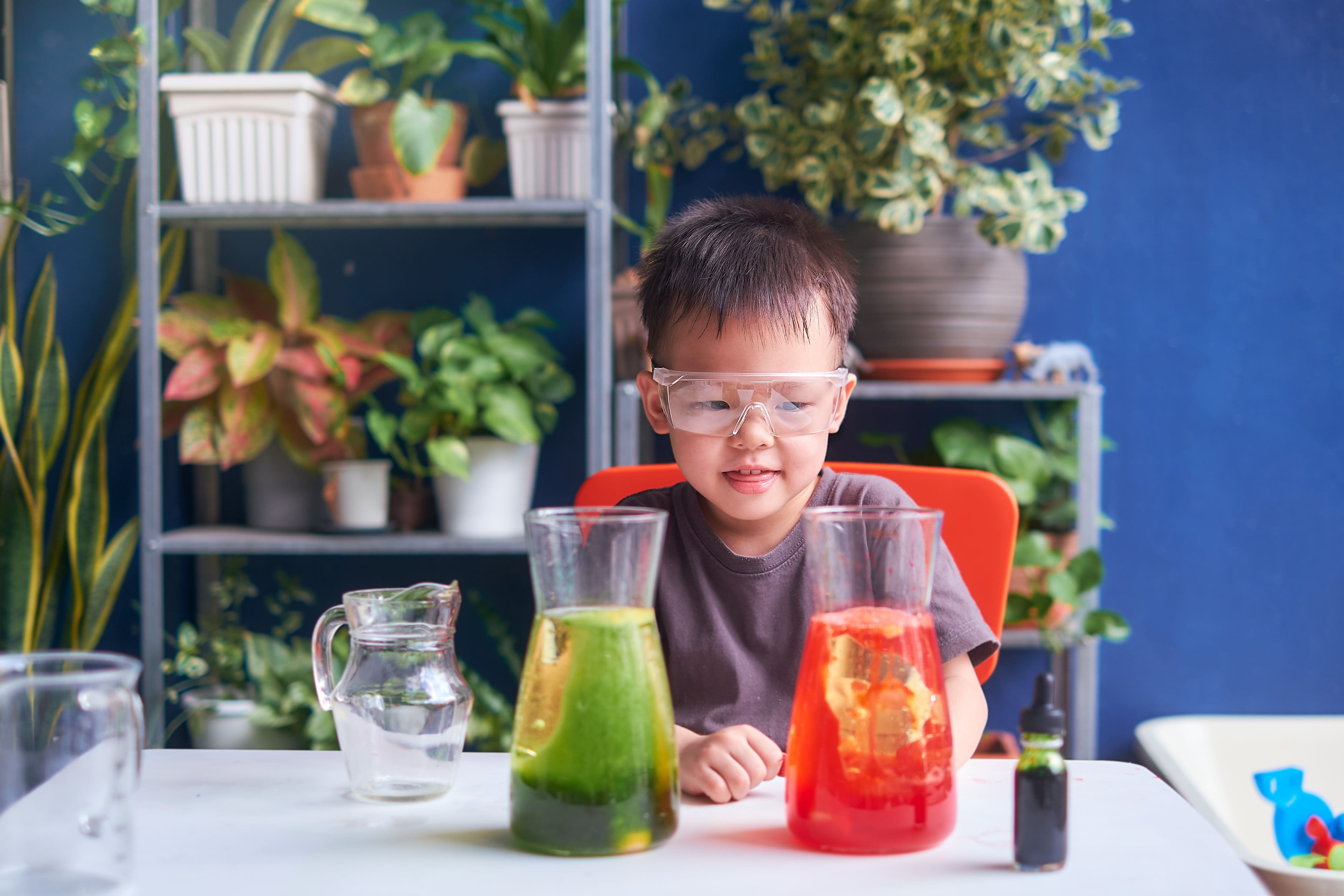 Oil and Water “Lava Lamps”
Ingredients:
- Empty plastic drink bottle
- Food coloring
- Water
- Cooking oil
- Alka-Seltzer tablets (cold and flu works just as well as tummy ache variety)
Directions:
- Add equal amounts of oil and water to your plastic container, leaving about ¼ of the space at the top empty.
- Add a few drops of food coloring
- Add one Alka-Selter tablet.
- Close the lid of the drink bottle and watch your “Lava Lamp” bubble and flow
- The water and oil separate into two distinct layers because they have different solubility. You may notice that your food coloring has dyed only the water layer or oil layer. This is due to the principle that like dissolves like. If your food coloring is water soluble, it will dye the water layer. If your food coloring is fat soluble, it will dye the oil layer. The carbon dioxide gas released by the Alka-Seltzer tablet pushes the oil and water around, but they will never truly mix. Once the gas has stopped bubbling the oil and water will return to two distinct layers.